
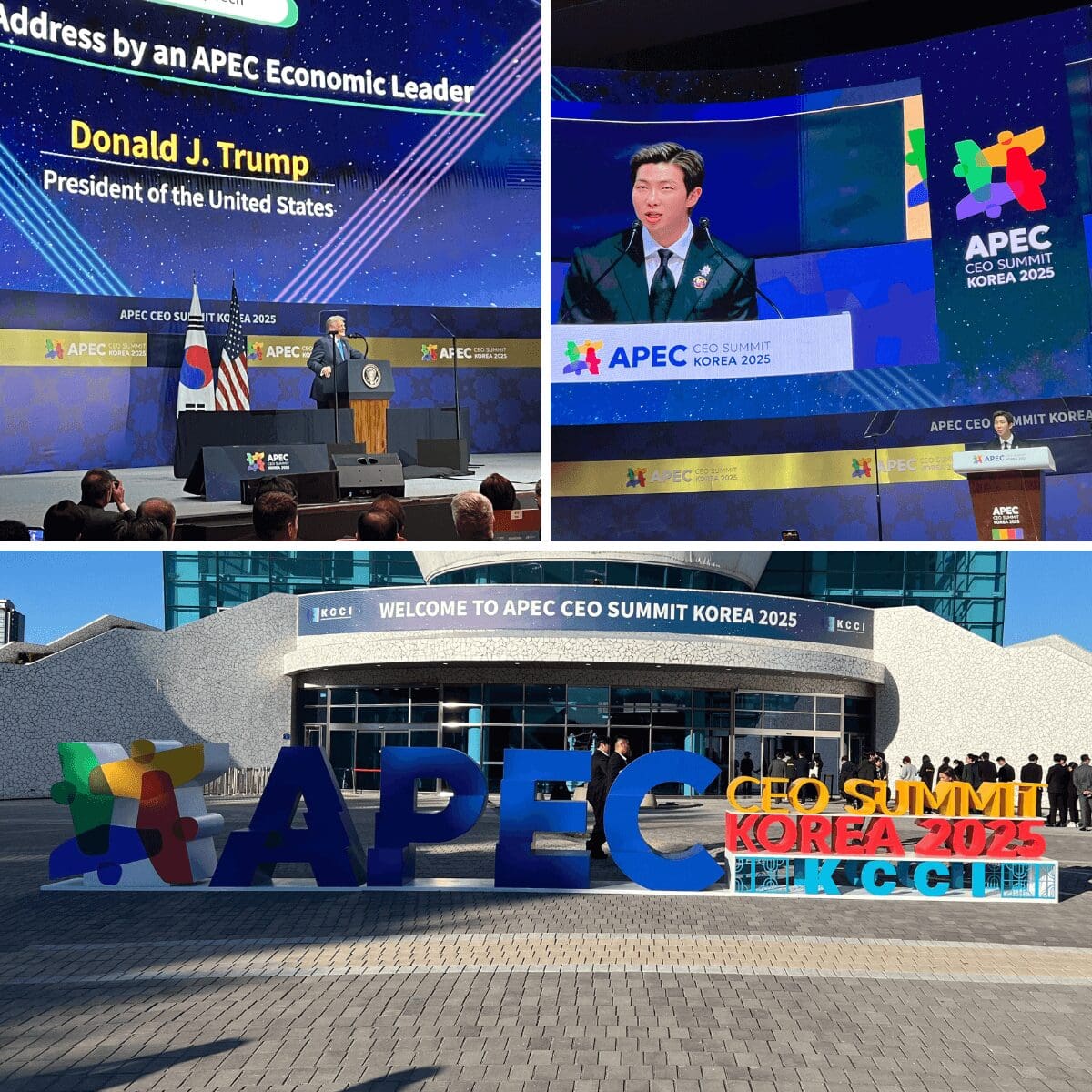
As APEC enters a pivotal year, recent meetings underscored a clear message from leaders and ministers across the region: economic cooperation must evolve to keep pace with rapid technological change and profound demographic shifts.
 At the APEC Summit last November, Leaders signed off on an agenda aimed at modernizing trade rules, speeding cross-border commerce, and focusing the organization on a forward-looking approach to AI adoption.
The declaration spotlights growing momentum to revitalize and update the WTO, while urging economies to move faster on practical steps that reduce friction for business. Ministerial communiqués, shaped by input from ABAC and PECC, underscore a stronger role for companies in tackling supply chain challenges and building resilience.
In business-facing outcomes, Ministers endorsed the ABAC-led APEC Centre of Excellence for Paperless Trade, signaling a push to scale digital trade tools that can cut red tape and streamline documentation across borders. Ministers also flagged the need to identify ways to use AI to facilitate trade, pointing to opportunities to improve trade efficiency through smarter processes, risk management, and compliance.
APEC Leaders also endorsed two headline deliverables from Korea focused on the region’s next wave of economic challenges and opportunities:
APEC AI Initiative (2026–2030): A multi-year plan to coordinate APEC work on AI, centered on:
- supporting successful AI adoption and transformation,
- building AI capacity across economies and workforces, and
- fostering investment conditions for resilient AI infrastructure.
APEC Collaborative Framework for Demographic Changes: A region-wide effort to respond to aging populations and shifting labor markets by:
- strengthening resilience to demographic change,
- modernizing human resources development,
- advancing technology-supported health and care systems,
- expanding inclusive economic participation,
- and deepening regional cooperation.

APEC China 2026 Planning and Priorities
China’s Ministry of Foreign Affairs convened APEC Senior Officials on December 11–12 in Shenzhen for preparatory meetings ahead of the APEC 2026 host year. The city will also serve as the site of next year’s APEC Leaders’ Meeting on November 18–19, 2026.
China selected Shenzhen to underscore its APEC 2026 themes of openness, innovation, and cooperation. Over the past 40 years, it has grown from a fishing village into one of China’s largest GDP-producing cities. To reinforce this narrative, China organized site visits to showcase major technology firms, including drone manufacturer DJI and tech behemoth Tencent.
Deputy Minister of Foreign Affairs Ma Zhaoxu opened the ISOM plenary on December 12 with remarks that set the context for China’s APEC 2026 agenda which will focus on the following priorities and sub-themes:
- Openness – WTO reform, regional economic integration, connectivity
- Innovation – AI, digital economy, capacity-building, services
- Cooperation – inclusion, sustainability, technical cooperation
Charged with leading the execution of APEC 2026, the Ministry of Foreign Affairs is taking guidance from President Xi Jinping’s written submission to the APEC CEO Summit in Korea (available here), which calls on APEC to refocus on its original mission of building an Asia-Pacific community. China will further develop its plans for specific 2026 deliverables during SOM 1. At the same time APEC will be reviewing or renewing several ongoing initiatives on topics including connectivity, services, digital economy and supply chain connectivity.
China is also planning to host several sectoral ministerial meetings beginning mid-year, including Trade, Women and the Economy, Digital and AI, Tourism, Food Security, SME, Energy, Human Resources Development, Forestry, and Finance. NCAPEC looks forward to working with partner organizations in China to hold engagement opportunities for the private sector on the margins of many of these meetings.